

Should we mourn the disappearance of the Rocky Mountains locusts?
 I am spoiled. I admit it. But in my defense, I shall say: In the industrialized world most of us are spoiled! We are living in far greater comfort than the kings of the middle ages who lacked modern medicine and ipods. If you don’t believe me, read on this story about the locust epidemics. The Writer’s Almanac reports:
It was on this day in 1875 that the largest recorded swarm of locusts in American history descended upon the Great Plains. An estimated 3.5 trillion locusts made up the swarm. It was about 1,800 miles long and 110 miles wide, ranging from Canada down to Texas.
Swarms would occur once every seven to 12 years, emerging from river valleys in the Rocky Mountains and sweeping east across much of the country. The size of the swarms tended to grow when there was less rain, and in 1873, the American West began to go through one of its driest periods on record.
John Stoppard on the meaning of his early play
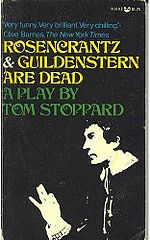 From Writer’s Almanac: Stoppard was a drama critic, and while watching a performance of Hamlet he began thinking about the minor characters Rosencrantz and Guildenstern, who are hired by King Claudius to spy on Hamlet.
Stoppard decided to write a play that would tell Hamlet from the point of view of Rosencrantz and Guildenstern. In Stoppard’s version, they spend the play worrying that their lives have no meaning, and it’s only by participating in Hamlet’s story that they find any purpose. The play was called Rosencrantz and Guildenstern Are Dead (1967), and it made Stoppard the youngest playwright ever to have a play staged by the National Theatre in London. He was just 29 years old. When it had its premiere in New York, Stoppard was asked what the play was about. He said, “It’s about to make me rich.”
I’m glad I am not David Cameron or Barak Obama
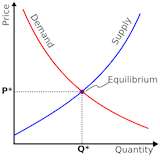 If you have been studying the business pages of major newspapers and business magazines, you will realize that a fierce battle is being waged by believers in demand or supply side economics. Everyone after the Great Depression used to be a demand sider; then Milton Friedman and his conspirators convinced many politians that government spending created short terms fixes but long-term growth problems. I would like to have someone spell out for me what evidence made the majority of economists swing the the demand side camp only in the 1970s and 1980s. David Brooks paints a thoughtful portrait, sympathiszing with demand siders, of the difficult positions Barak Obama and David Cameron are in. With regard to Cameron’s proposal to cut government spending by 40%, I think this is simply a negotiation ploy with the British bureaucracy. If not, God save the British people from the economic pain that Cameron will inflict on them in the short term.
Barney Frank’s Career Advice
 From Time.com: With his shaggy white hair, Frank joked that his mastery of the conference is simply a function of his inability to focus. “There’s one piece of advice I give young people—generally they don’t want us pontificating to ‘em—try to find a line of work where a central characteristic of your personality is an advantage rather than a disadvantage,” the Harvard Law School dropout told Politico last week. “For me, that’s a short attention span. A short attention span is a helluva handicap if you’re trying to write a Ph.D. thesis, but it is essential if you’re going to preside over a legislative conference with 17 issues coming up in a day.”
Family Wedding, Youth in Revolt, Arthur, and Brooklyn’s Finest
 Four films: two good, two bad. Family Wedding, which chronicles the challenges of marrying across cultural and racial boundaries, had great comic potential but delivered a lame treatment of the subject. Youth in Revolt is the opposite: a film about love that is poetic and deep. Two thumbs up. Arthur, mixing animation with human being acting, turned out better than anticipated. It celebrates the power of the human imagination. I will see the next installment. Brooklyn’s Finest was a waste of time because this film was already made many times.
Private Cooling: Al and Tipper Gore separate
 Ellen McCarthy (Washington Post) puts her finger on just how significant the news of Al and Tipper Gore’s divorce is and spells out what this means for the instution of marriage in a modern wolrd with life expectancies reaching nine decades.
Al and Tipper Gore’s separation makes us fear for our parents, ourselves
Please Al and Tipper, don’t do this. For our sakes—don’t.
We can’t handle it.
These kinds of things stopped bothering us long ago. Name almost any famous couple, and we’re happy to place under/over bets on the date they’ll divorce.
But the Gores were different. We believed in them. Even if we didn’t agree with their politics, we admired their marriage—the way, after all these years, they still genuinely seemed into each other.
Continue Reading

© 2026 Peter Murmann. Powered by ExpressionEngine.


